Sar Pass Trek Guide: Difficulty, Best Time, Cost & How to Prepare
Everything you need to know before the Sar Pass Trek in Himachal Pradesh: how hard it is, when to go, how to train, what to pack and what it costs — from the team that runs it.
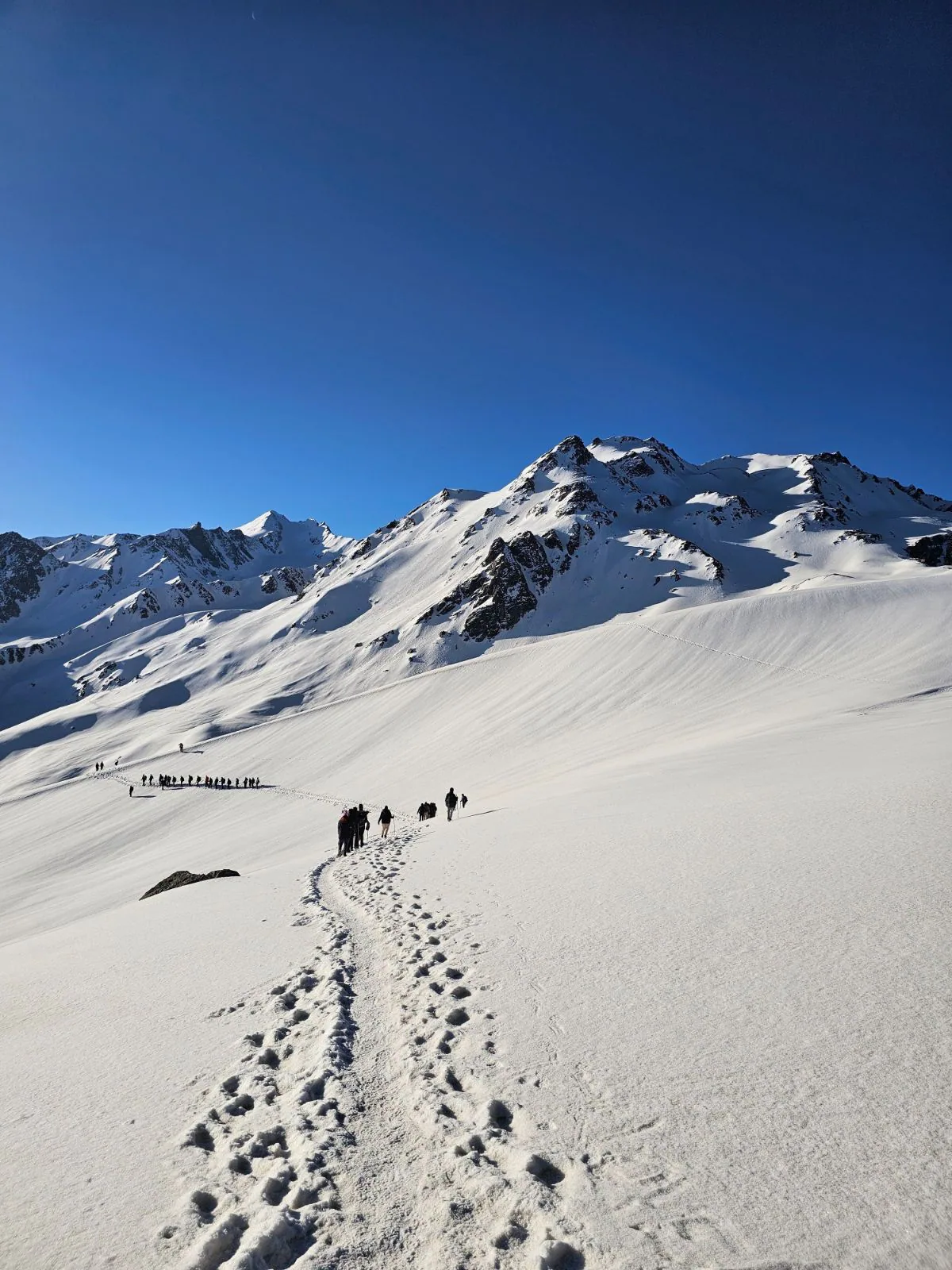
Why do the Sar Pass Trek?
- A snow pass at about 4,200 m above the Parvati valley
- The long snow slide down from the pass (May and June)
- Forest and meadow camps at Grahan, Min Thach, Nagaru and Biskeri
- Starts and ends in the Parvati valley — no retracing
How difficult is the Sar Pass Trek?
The Sar Pass Trek is graded moderate–difficult, covering about 48 km on foot and reaching about 4,200 m. Expect long, steep days and real altitude — it's best for trekkers with some experience and solid fitness.
Best time for the Sar Pass Trek
Best season: May–June for snow, September–October without it. See what each month is like on our treks in May page.
How to prepare for the Sar Pass Trek
Start training 8–10 weeks before the trek. By departure you should be able to jog 10 km in about 65 minutes comfortably.
- Run 5–10 km, five days a week, with one long run
- Hill or stair sessions with a 10 kg backpack, twice a week
- Strength training for legs, core and back, three days a week
- At least one earlier trek above 3,500 m is strongly recommended
- Break in your trekking shoes on at least three long walks before the trip
Altitude: above 3,000 m the air has noticeably less oxygen. Walk slowly, drink 3–4 litres of water a day, avoid alcohol, and tell your trek leader early about a headache, nausea or breathlessness. Read our altitude sickness guide.
Sar Pass Trek itinerary, day by day
- Day 1Kasol to Grahan — Meet at Kasol (about 1,580 m) — Manali pickup at 6 am is an add-on.
- Day 2Grahan to Min Thach — About 6 km and 5 hours, the steepest day so far, through oak and rhododendron.
- Day 3Min Thach to Nagaru — About 4 km and 4 hours, the trail getting steeper and — in May and June — snowy.
- Day 4Sar Pass, down to Biskeri Thach — About 4 hours to Sar Pass (about 4,200 m), roped where needed on snow.
- Day 5Biskeri Thach to Barshaini, drive to Kasol — About 12 km and 6 hours through Bandak Thach and forest to Barshaini.
Sar Pass Trek packing list
- ✓Trekking shoes with ankle support and a deep grip, broken in before the trip
- ✓40–60 L backpack with a rain cover, plus a small daypack if you offload
- ✓Three warm layers (fleece + padded/down jacket) — nights drop near or below 0 °C
- ✓Waterproof jacket or poncho and quick-dry trek pants (no jeans)
- ✓Thermal inner wear for the nights
- ✓Woollen cap, fleece gloves and 3 pairs of socks (1 woollen)
- ✓UV sunglasses, SPF 50 sunscreen and lip balm
- ✓Two 1 L water bottles (no single-use plastic on the trail)
- ✓Headlamp with spare batteries
- ✓Trekking pole (recommended; can be hired)
- ✓Personal medicines, plus Diamox only if your doctor advises it
- ✓Government photo ID — original and one photocopy (needed for forest permits)
- ✓Medical fitness certificate signed by a doctor (we send the format)
The full checklist: Himalayan trek packing list.
How to reach the Sar Pass Trek
Our trip starts and ends at Manali bus stand, or Bhuntar Airport with a pickup charge. Bhuntar (Kullu) airport is about 50 km away with limited flights; most travellers come by overnight bus or car from Delhi and Chandigarh (12–14 hrs and 8–9 hrs).
Sar Pass Trek cost
Our 5-day Sar Pass Trek costs ₹11,500 per person.
Included
- Shared transport from Kasol (Manali pickup is an add-on) to the trailhead and back
- 4 nights in tents
- All meals on the trek, from lunch on day 1 to lunch on the last day
- Certified trek leader trained in wilderness first aid, plus a local guide, cook and support staff
- Forest-department and trek permits, camping charges
- Tents, sleeping bags, mats, dining and toilet tents
- First-aid kit, oxygen cylinder and pulse oximeter — everyone is checked every morning and evening
- Microspikes, gaiters and ropes for the pass
Not included
- Travel to the pickup point and back home
- Backpack offloading (available as an add-on)
- Personal trekking gear — shoes, jackets, poles (can be hired as an add-on)
- Meals on the drive days before and after the trek, unless listed
- Travel insurance
- Anything personal: tips, snacks, bottled drinks, phone charging at tea shops
- Costs from weather, landslides or road closures that force a change of plan
Sar Pass Trek: questions trekkers ask
How difficult is the Sar Pass Trek?
It's graded moderate–difficult, with about 48 km on foot over 5 days and a highest point of about 4,200 m. It needs good fitness, and some earlier trekking experience helps.
What is the best time for the Sar Pass Trek?
May–June for snow, September–October without it.
How much does the Sar Pass Trek cost?
Our 5-day trip starts at ₹11,500 per person, including shared transport from kasol; 4 nights in tents; all meals on the trek, from lunch on day 1 to lunch on the last day.
What is the maximum altitude of the Sar Pass Trek?
About 4,200 m above sea level. Acclimatise slowly, drink plenty of water and tell your trek leader about any headache or nausea.
Can beginners do the Sar Pass Trek?
It's not ideal as a first trek. Train for 8–10 weeks (aim to jog 10 km in about 65 minutes) and ideally do an easier trek first.
Where does the Sar Pass Trek start?
Our trip starts and ends at Manali bus stand, or Bhuntar Airport with a pickup charge. Bhuntar (Kullu) airport is about 50 km away with limited flights; most travellers come by overnight bus or car from Delhi and Chandigarh (12–14 hrs and 8–9 hrs).
Ready for the Sar Pass Trek?
Trek leader, permits, camps and meals handled — one enquiry, no payment until you confirm.