Chadar Trek Guide: Difficulty, Best Time, Cost & How to Prepare
Everything you need to know before the Chadar Trek in Ladakh: how hard it is, when to go, how to train, what to pack and what it costs — from the team that runs it.
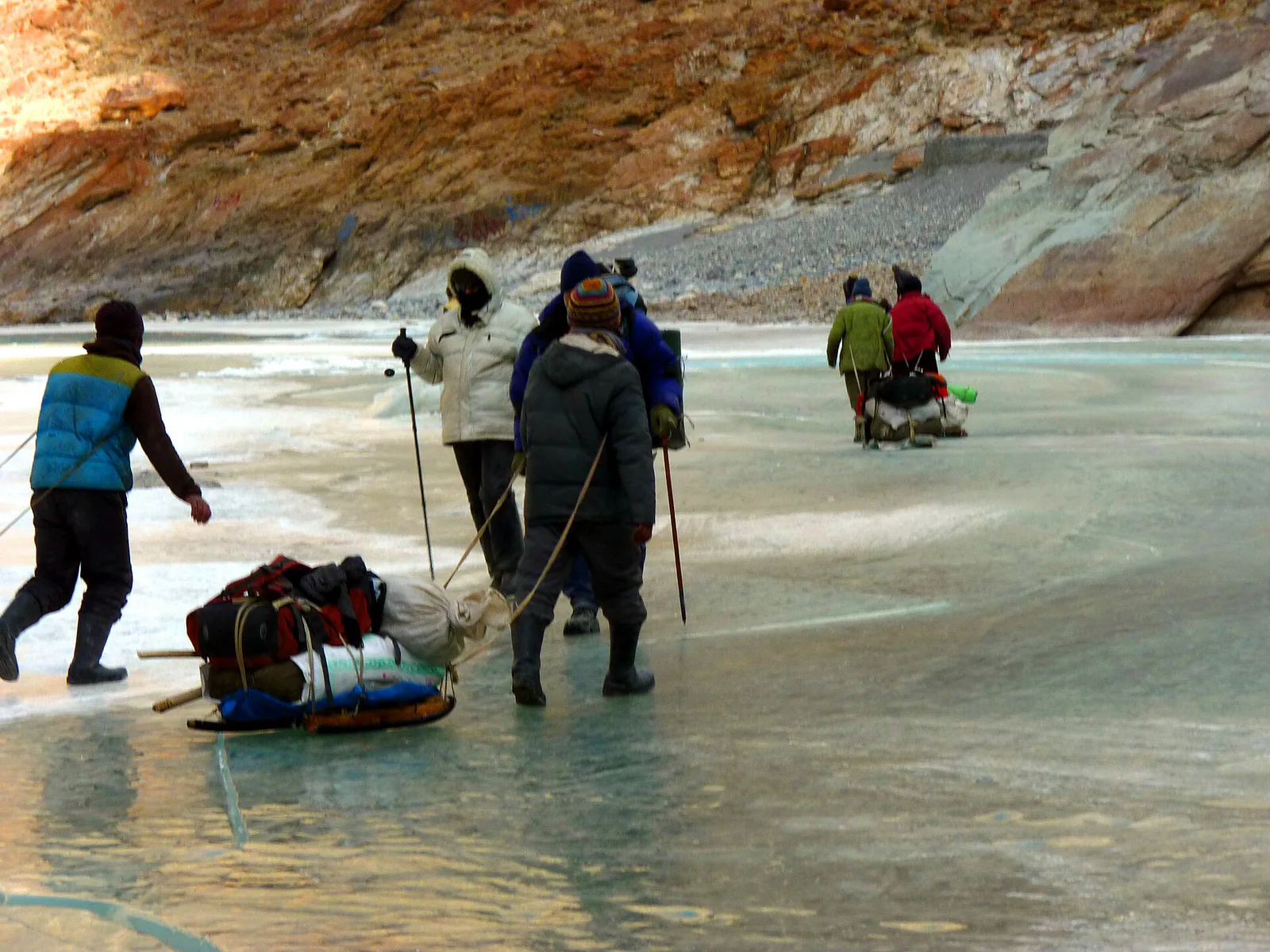
Why do the Chadar Trek?
- Walk on the frozen Zanskar river through a deep canyon, at −15 to −25 °C at night
- The frozen Naerak waterfall
- Nights in caves and riverside camps, the way Zanskari villagers used to travel
- Three mandatory acclimatisation days in Leh, with the official medical check
- Season: mid-January to February — limited batches
How difficult is the Chadar Trek?
The Chadar Trek is graded difficult, covering about 62 km on foot and reaching about 3,400 m. Expect long, steep days and real altitude — it's best for trekkers with some experience and solid fitness.
Best time for the Chadar Trek
The trek is at its best from January, February. From December to February expect snow on the trail and nights well below freezing — microspikes and proper winter layers matter. See what each month is like on our treks in January page.
How to prepare for the Chadar Trek
Start training 10–12 weeks before the trek. By departure you should be able to jog 10 km in under 60 minutes comfortably.
- Run 8–10 km, five days a week, with one long run of 12 km+
- Loaded stair or hill sessions (10–12 kg), twice a week
- Strength and balance training three days a week
- Prior Himalayan trekking experience (ideally above 4,000 m) is expected
- Break in your trekking shoes on at least three long walks before the trip
Altitude: above 3,000 m the air has noticeably less oxygen. Walk slowly, drink 3–4 litres of water a day, avoid alcohol, and tell your trek leader early about a headache, nausea or breathlessness. Read our altitude sickness guide.
Chadar Trek itinerary, day by day
- Day 1Arrive in Leh — Airport pickup and hotel check-in.
- Day 2Acclimatisation in Leh — A slow walk to Shanti Stupa and the Leh market, then rest.
- Day 3Medical check and permits — The government medical check that every Chadar trekker must pass, plus the ALTOA formalities (insurance and wildlife/environment fees, paid in Leh).
- Day 4Leh to Shingra Koma, onto the ice — About 70 km and 3 hours via Nimmu and Chilling, along the Zanskar.
- Day 5Somo Paldar to Tibb cave — About 14 km and 6–7 hours between sheer rock walls and frozen waterfalls.
- Day 6Tibb to Naerak — About 12 km and 6–7 hours to Naerak and its famous frozen waterfall, with a prayer-flag bridge above the river.
- Day 7Naerak back to Tibb — About 12 km.
- Day 8Tibb to Shingra Koma, drive to Leh — About 15 km to the road head, then the drive back to Leh.
- Day 9Fly out (buffer) — Fly out of Leh.
Chadar Trek packing list
- ✓Down jacket rated to −20 °C, plus fleece and padded layers
- ✓Two sets of thermal inner wear
- ✓Waterproof gloves over woollen gloves, balaclava, woollen cap
- ✓Woollen socks (5–6 pairs) — feet get wet on the chadar
- ✓Trekking shoes for camp; gumboots are provided for the ice
- ✓UV sunglasses (snow glare), SPF 50 sunscreen, lip balm
- ✓Insulated water bottle or thermos
- ✓Personal medicines; ask your doctor about Diamox
- ✓Government photo ID — original and copies (needed for the medical check and permits)
The full checklist: Himalayan trek packing list.
How to reach the Chadar Trek
Our trip starts and ends at Kushok Bakula Rimpochee Airport, Leh. Leh has daily flights from Delhi. The Manali and Srinagar road routes are open only in summer and take two days each, with a night's halt for altitude.
Chadar Trek cost
Our 9-day Chadar Trek costs ₹29,999 per person.
Included
- 4 nights in a heated guesthouse in Leh (twin sharing) — days 1–3 and 8
- 4 nights in tents and cave camps on the trek, with sleeping bags rated for −20 °C
- All meals from dinner on day 1 to breakfast on day 9
- Experienced Chadar trek leader, local Zanskari guides, cooks and porters for common gear
- Airport pickup and drop; transport Leh → Shingra Koma → Leh
- Gumboots for the ice, first aid, oxygen cylinder and pulse oximeter checks twice a day
Not included
- Flights to and from Leh
- ALTOA fees, wildlife and environment fees and the mandatory insurance — paid in Leh, set each season
- Personal winter gear (down jacket, thermals, waterproof gloves)
- Backpack offloading (available as an add-on)
- Extra nights if the ice or weather forces a delay
- Anything personal
Chadar Trek: questions trekkers ask
How difficult is the Chadar Trek?
It's graded difficult, with about 62 km on foot over 9 days and a highest point of about 3,400 m. It needs good fitness, and some earlier trekking experience helps.
What is the best time for the Chadar Trek?
January, February. Expect snow and sub-zero nights in the winter months.
How much does the Chadar Trek cost?
Our 9-day trip starts at ₹29,999 per person, including 4 nights in a heated guesthouse in leh; 4 nights in tents and cave camps on the trek, with sleeping bags rated for −20 °c; all meals from dinner on day 1 to breakfast on day 9.
What is the maximum altitude of the Chadar Trek?
About 3,400 m above sea level. Acclimatise slowly, drink plenty of water and tell your trek leader about any headache or nausea.
Can beginners do the Chadar Trek?
It's not ideal as a first trek. Train for 10–12 weeks (aim to jog 10 km in under 60 minutes) and ideally do an easier trek first.
Where does the Chadar Trek start?
Our trip starts and ends at Kushok Bakula Rimpochee Airport, Leh. Leh has daily flights from Delhi. The Manali and Srinagar road routes are open only in summer and take two days each, with a night's halt for altitude.
Ready for the Chadar Trek?
Trek leader, permits, camps and meals handled — one enquiry, no payment until you confirm.